
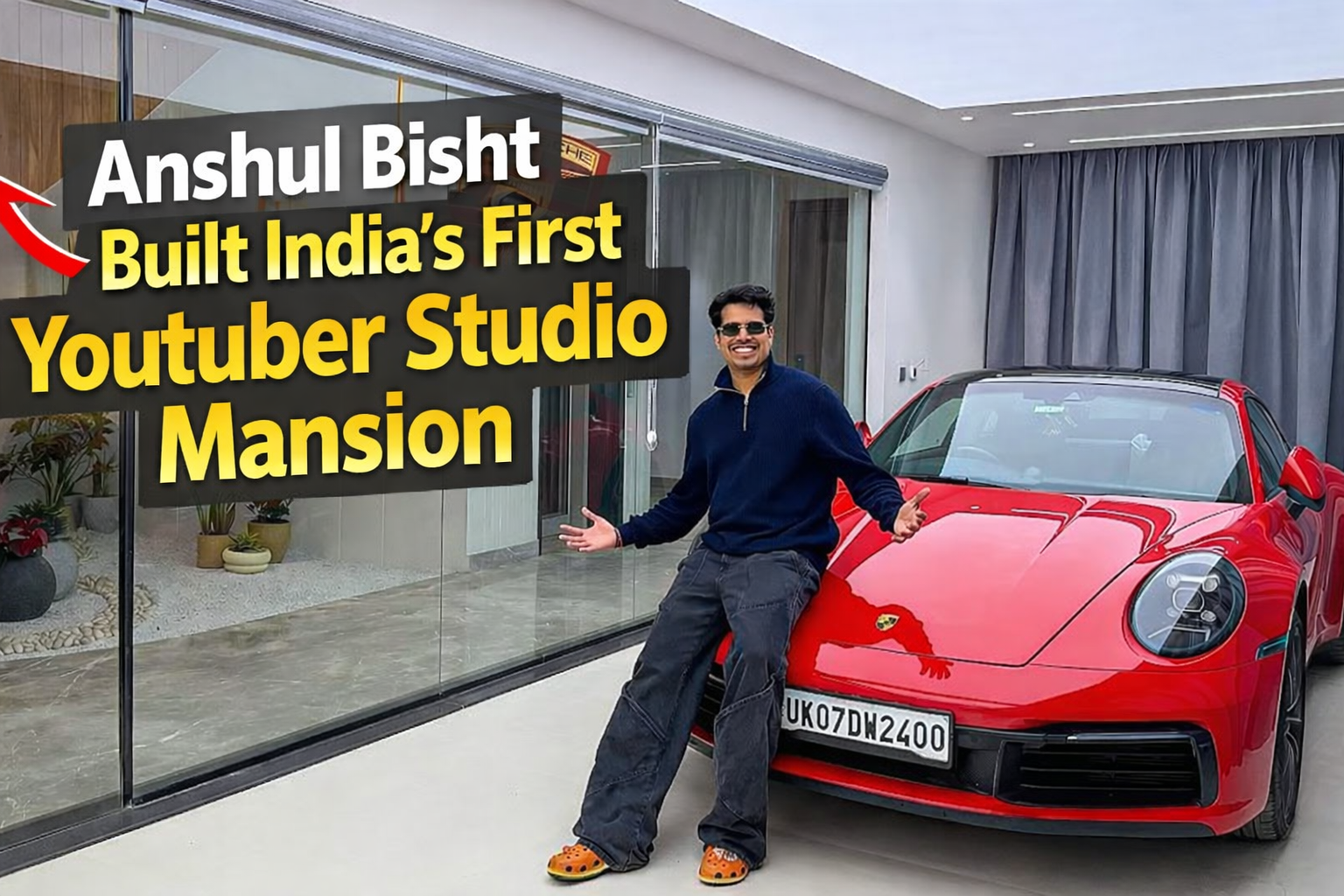
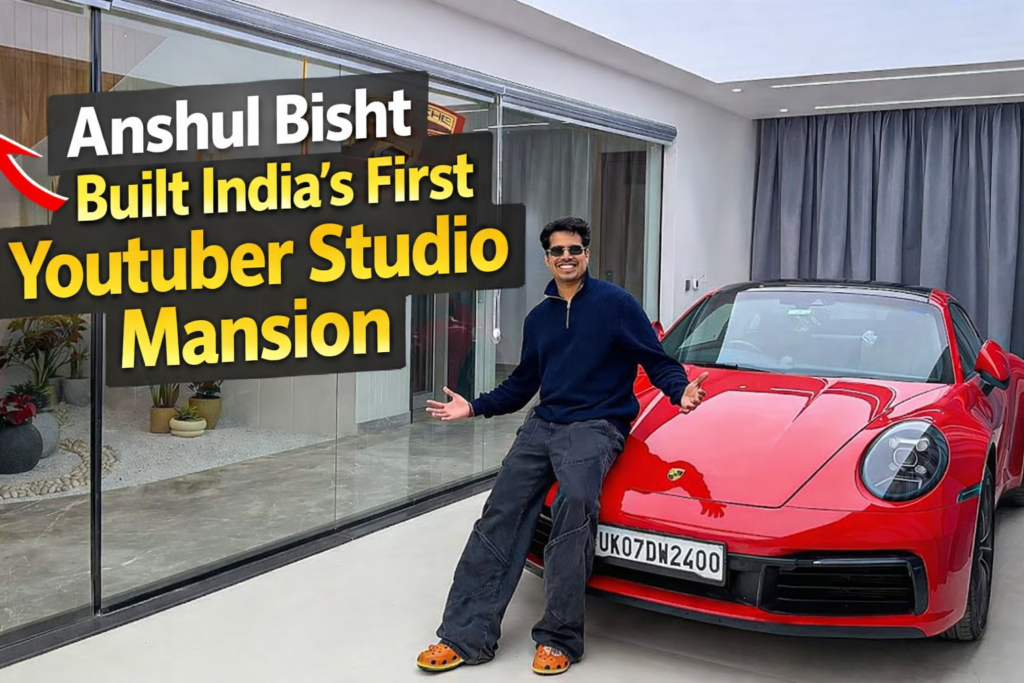
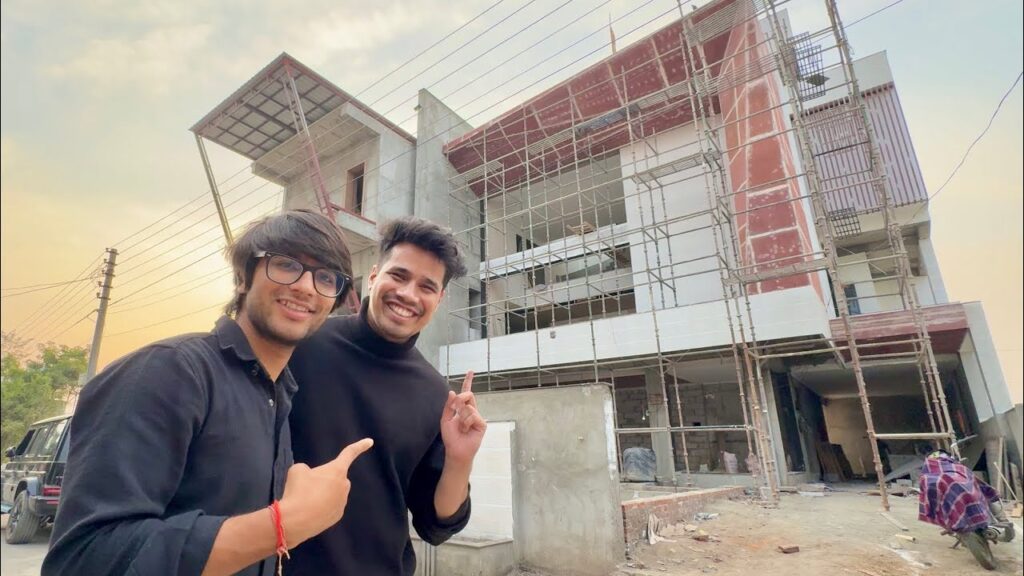
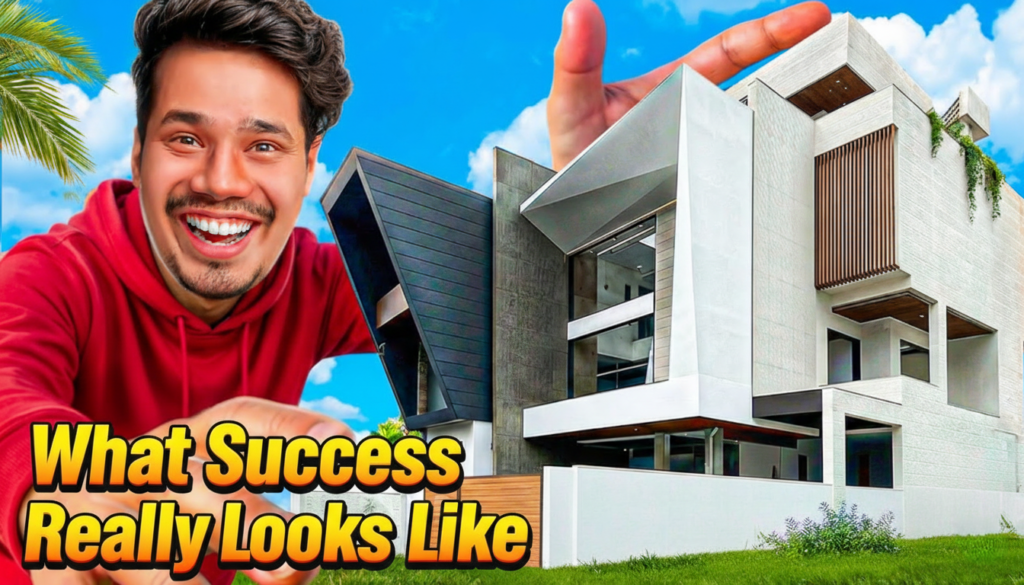
Anshul Bisht, known as GamerFleet, remembers crying during his live streams. His father would yell at him about wasting time on video games. The house felt too small, the walls seemed to close in on him. He wondered if his life would ever get better. Today, that same piece of land holds a massive 20-foot metal structure hanging over the street like something from a science fiction movie. This is Bisht Niwas—a house built not for living, but for creating content.
This Isn’t Really a Home
Walk into Bisht Niwas and you’ll notice something strange immediately. The ground floor doesn’t have a regular living room with a couch and TV. Instead, there’s a full production studio built for filming videos and streaming. Even more unusual—there’s a Porsche Carrera sitting behind glass where a family room should be. It’s not just parked there because Anshul likes cars. It’s there because showing expensive things gets more views and engagement from his audience.
This is what I call a “content-first” home. Every room, every corner is designed to look good on camera. The house isn’t built around family life anymore—it’s built around making videos.
Everything is Automated for the Camera
The materials in this house come from all over the world. Japanese Zen gardens, European wood, and a dining table made from rare Brazilian stone. But here’s what makes it different from a regular luxury home—everything responds to voice commands through Alexa. The Brazilian stone table lights up when you ask it to. The curtains open and close on command. Even the showers have multiple settings controlled by voice.
This isn’t automation for convenience like turning off lights without getting up. This is automation designed to look impressive on video. The question isn’t “Does this make life easier?” It’s “Will this impress my viewers?”
The Hidden Costs Nobody Sees
Behind all the fancy marble and expensive materials is something most people don’t think about—a massive server and electrical room. Anshul says it’s one of the most expensive parts of the house. It’s filled with industrial-level wiring and backup power systems to prevent even one second of power loss.
For most people, a power cut is annoying. For someone streaming to millions of viewers, it means lost money, broken promises to sponsors, and angry fans. This house isn’t just a home with good WiFi—it’s basically a TV station that happens to have bedrooms.
What Success Really Looks Like
The most interesting part isn’t the expensive stuff—it’s what this house means to Anshul’s family. His mother says it feels like a dream, almost unreal. For years, his parents doubted his choice to make gaming videos. They argued about it constantly. Now they’re living in a house that those videos paid for.
The master floor has a circular bed, a private Jacuzzi, and a gaming room so complex it needed its own separate video to explain it. But notice something important—even the bedroom is designed to look good on camera. The private spaces aren’t really private anymore. Everything exists to be filmed and shared.
What This Means for the Future
Bisht Niwas shows us where India’s creator economy is heading. More young people are making serious money from YouTube, Instagram, and social media. And they’re building homes that work as production studios first and living spaces second.
But this raises a big question: When your bedroom is a film set, when your dining room must always look perfect for the camera, when even your bathroom is chosen because it looks good in videos—where do you actually live? Where can you be messy, turn off the camera, and just be yourself?
The old advice would be “create boundaries between work and home,” but that’s impossible when your income depends on making content constantly. Your audience doesn’t take weekends off. Sponsors want videos every week. So you end up building a house where every room is designed for the public to see.
The Real Trade-Off
Anshul went from crying during streams in a small house to owning a mansion most people twice his age couldn’t afford. That’s amazing. But he also went from having a private life to living in a space where nothing is truly private, because every room exists to be shown and filmed.
The expensive power systems, the voice-controlled everything, the materials shipped from three countries—these aren’t just luxury items. They’re business tools disguised as home features. Success doesn’t just change your bank account; it changes how you live every single day.
My Opinion
Bisht Niwas proves that content creation can generate real wealth in India. It shows that young people can build serious success outside traditional careers. Anshul has created something remarkable—a home that validates his family’s trust in him while also serving as a professional studio for his business.
As more Indian creators reach this level of success, we’ll see more homes built this way—spaces designed for content first and living second. But as the line between private life and public content disappears completely, as homes become film sets and families become part of the show, one question remains: When everything in your life exists to be filmed and shared, what happens to the version of yourself that only exists when the camera is off?