
Is India's Street Food Capital really worth the hype? One food vlogger decided to find out the hard way.
There's something almost sacred about the way Indians talk about street food. Mention Indore in any food-loving circle, and you'll get the same reverent nods—the kind usually reserved for pilgrimage sites. "The Street Food Capital of India," they call it. But here's the thing about capital cities: sometimes the tourism board works harder than the actual attractions.
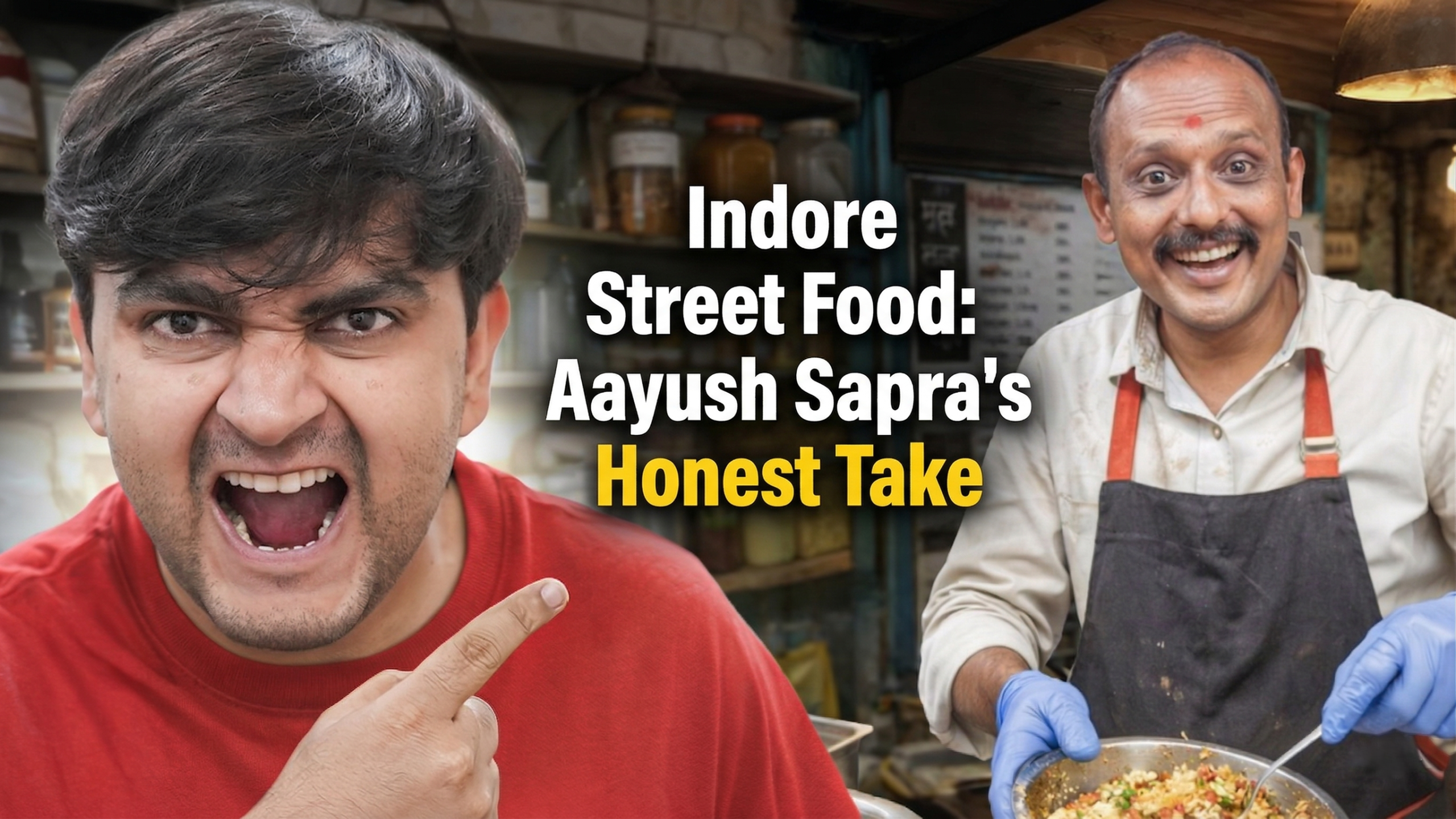
That's exactly what drew me to Aayush Sapra's latest video. Not the polished Instagram reels or the glowing Google reviews, but the promise of something messier. Something honest. When Aayush announced he was returning to Indore with local creator Oye Indori (Robin) to "expose" overrated street food, I grabbed my metaphorical popcorn. Finally, someone willing to say what we've all thought—that maybe, just maybe, some of this hype is manufactured.
What unfolded over the next twenty-something minutes wasn't quite what I expected. Spoiler alert: Indore mostly held its own. But the journey there? That's where the real flavor was.
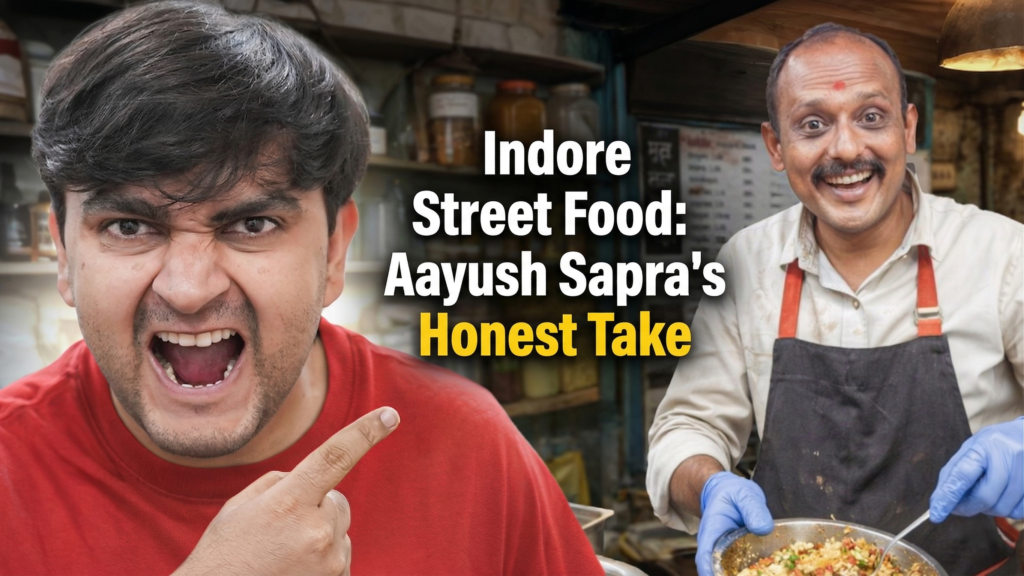
When Poha Gets an Identity Crisis
Let me tell you about my own poha trauma first. Growing up, poha was that reliable breakfast—flattened rice, turmeric, peanuts, maybe some sev if mom was feeling fancy. Simple. Comforting. Predictable.
Then Aayush walks into Head Sahab Ka Poha, a 40-year-old institution where they've apparently spent four decades asking: "But what if poha… wasn't poha?"
The Usad Poha they serve here is borderline rebellious. We're talking paneer chunks, dahi, chole, and—wait for it—raisins. Raisins. In poha. I actually paused the video to process this. My grandmother would have words.
But here's where Aayush's review got interesting. He didn't immediately dismiss it as fusion-food nonsense. Instead, he noted how these toppings somehow balanced the dish's "intense spiciness." What struck me wasn't the ingredient list—it was the confidence. Forty years of making the same dish, tweaking it until it became something entirely its own. That's not overrated—that's evolution.
The Egg Benjo That Made Me Question My Life Choices
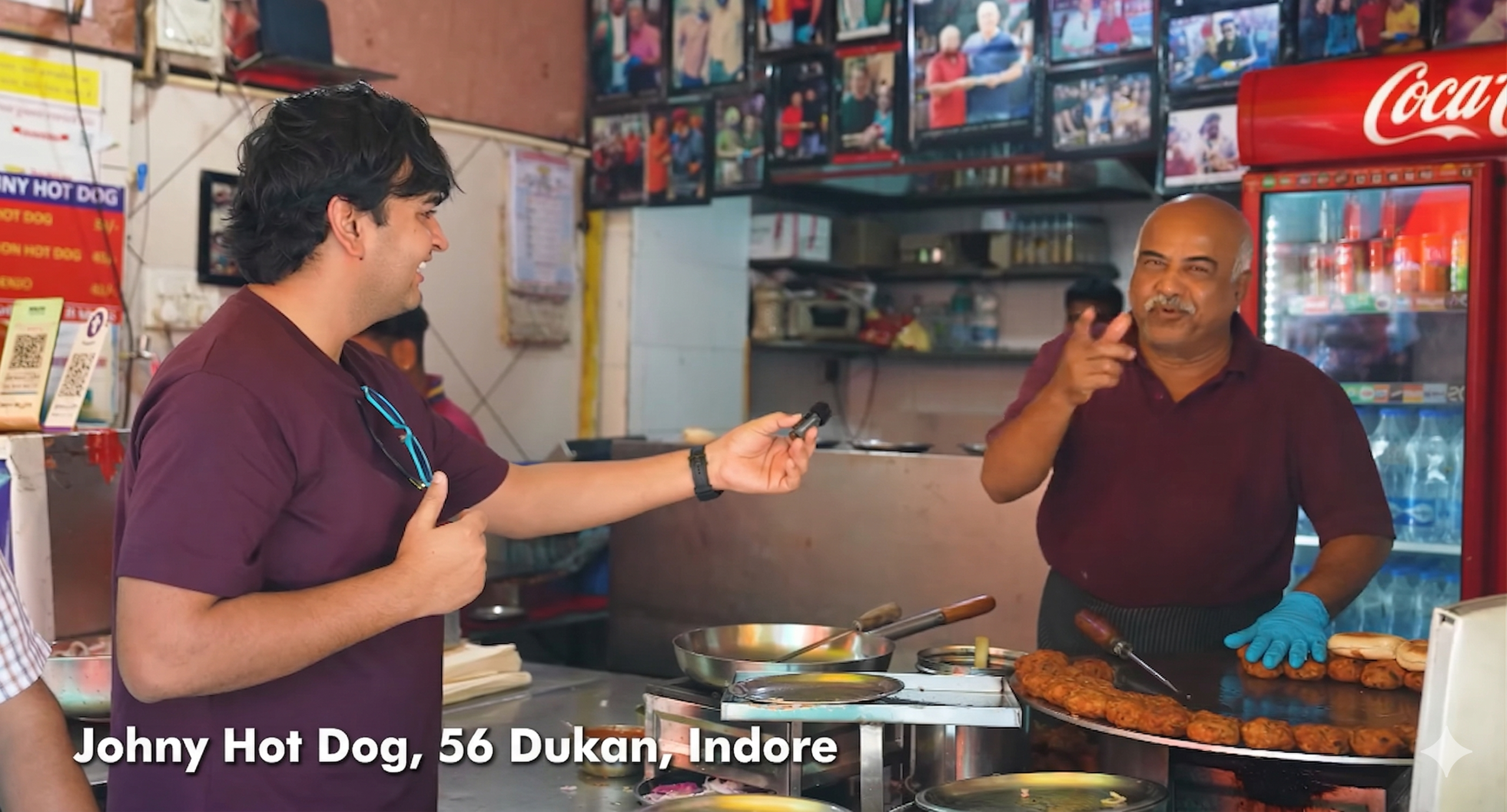
Look, I’ve had hot dogs. You’ve had hot dogs. We’ve all had that 2 AM hot dog that tasted like regret and sodium. But Johny Hot Dog in 56 Dukan hits different.
The place is covered in celebrity photos like some kind of fast-food hall of fame. Normally, that’s a red flag for me. Celebrities eat where their assistants tell them to eat. But Aayush tried the Egg Benjo anyway, because that’s what honest food reviewing looks like.
I found myself weirdly emotional about this. In an era where every street vendor is trying to go viral with cheese pulls and oversized portions, here’s a place just… making good hot dogs. Consistently. For whoever shows up. There’s something almost radical about that kind of unpretentious excellence.
In an era of influencer campaigns and algorithm-friendly food trends, a stall that’s been sustained purely by actual working people showing up daily—that’s not overrated. That’s earned.
The Theater of Joshi Ji: Where Food Meets Performance Art
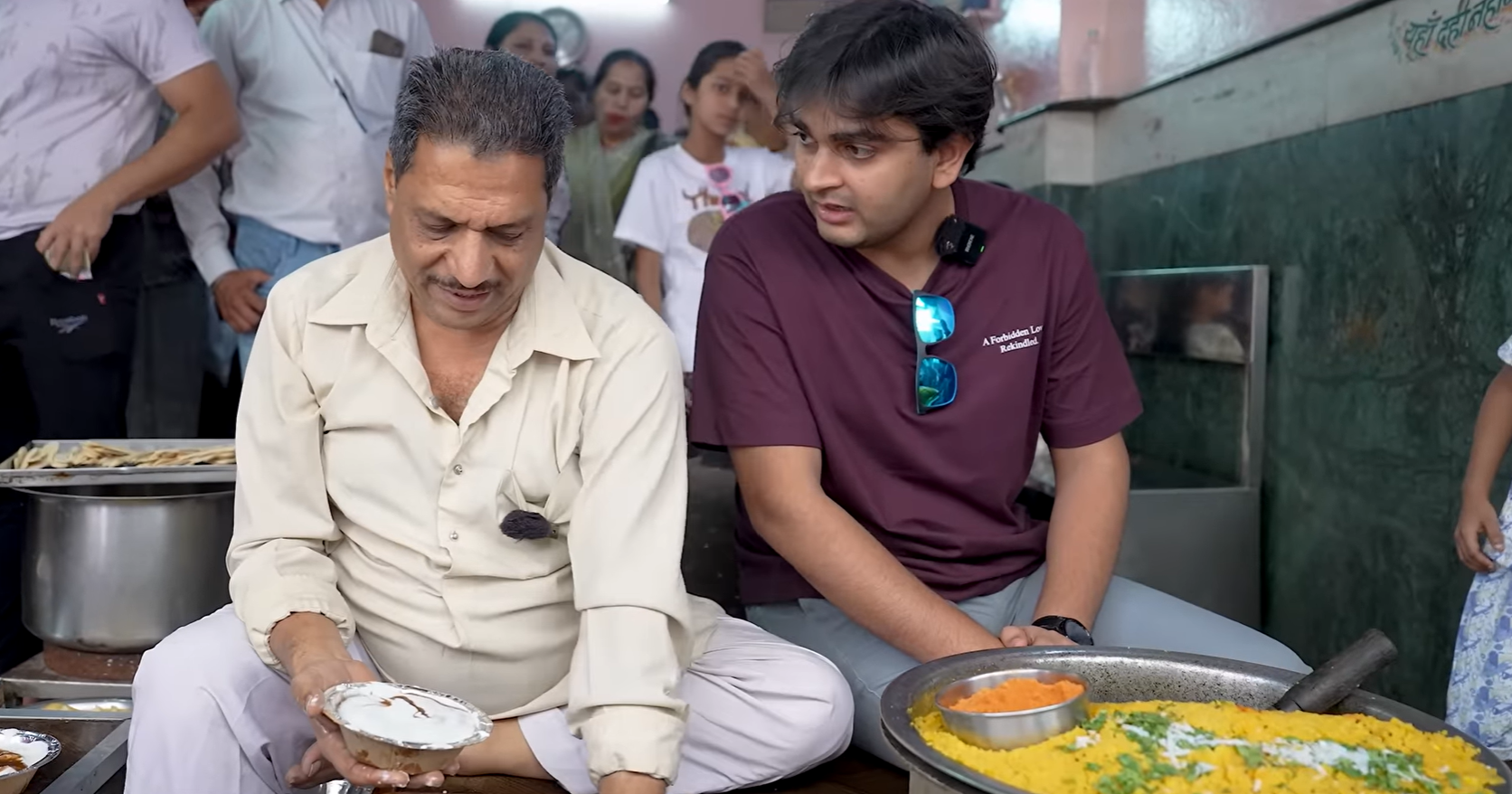
This is where the video shifted from “good food vlog” to “I need to book a train ticket to Indore.”
Joshi Ji isn’t just selling Dahi Bada. He’s conducting a symphony. Tossing the bada high enough to need flight clearance. Sprinkling spices with the intensity of a Shakespearean actor delivering a death scene. Speaking in poetic metaphors that probably lose something in translation but gain everything in delivery.
Aayush also tried their Bhutte ki Kachori, which deserves its own paragraph but got somewhat overshadowed by the performance. That’s the thing about Joshi Ji—the food could be mediocre (it’s not, by all accounts), and people would still line up for the show.
The experience matters as much as the taste. Maybe more. A comparison that’s impossible to ignore:
“Lafasi” and the Art of Hilarious Exaggeration
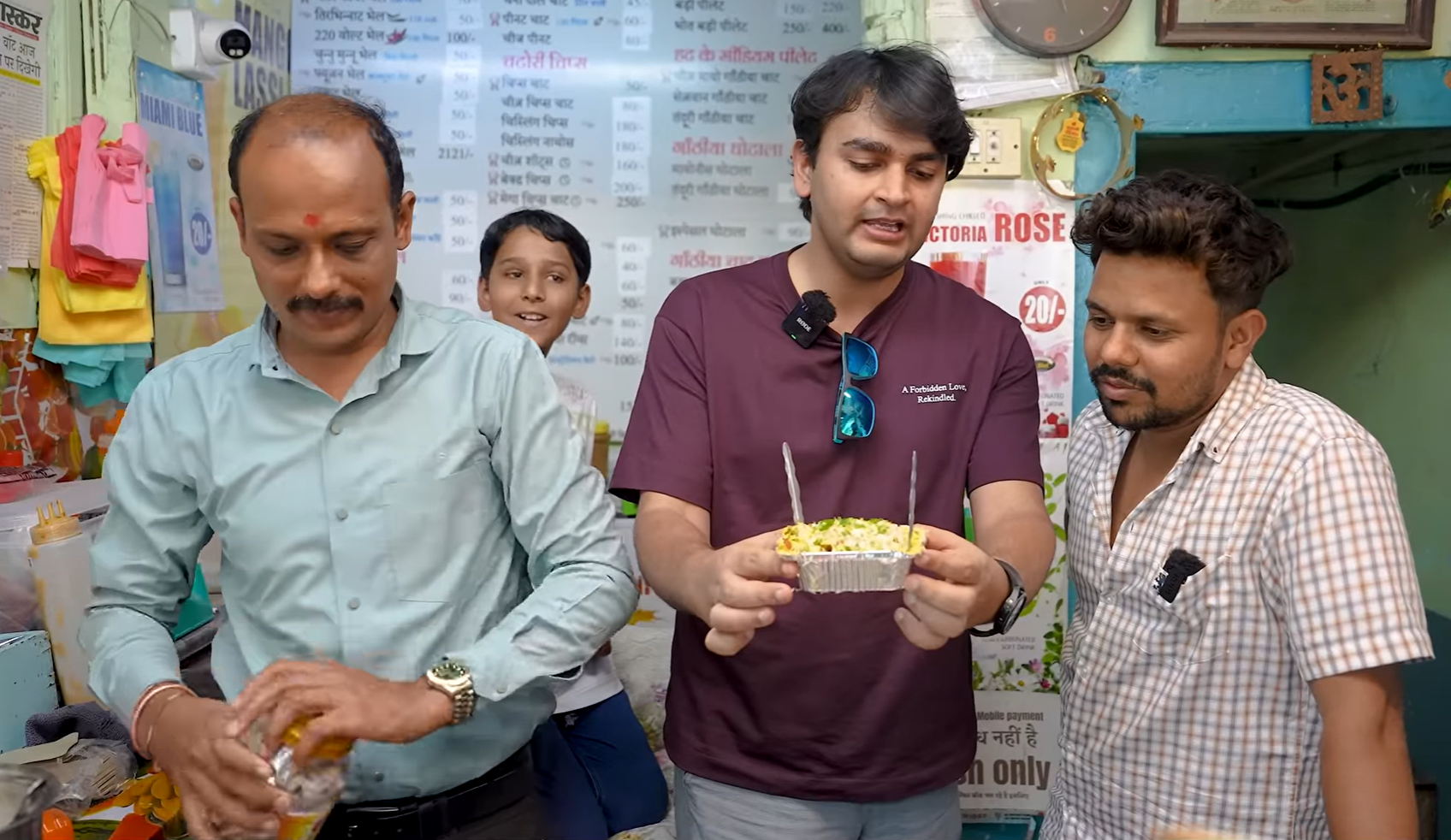
The Bhel Bhandari segment broke me. I mean that literally—I had to pause the video because I was laughing too hard to focus.
For the uninitiated, “Lafasi” is apparently an Indori specialty. Not the bhel itself, but the storytelling around it. This vendor, selling a ₹120 Cheese Tandoori Bhel, has committed to a bit so hard it becomes art. Behold the ingredient origins:
Personal Collection
Aayush gave him 5/5 for storytelling, and honestly, that’s underselling it. In a world of “authentic experiences” and “farm-to-table transparency,” here’s a man building an entire mythology around a street snack.
This is the part of street food culture we don’t talk about enough—the personalities. The vendors who’ve spent decades perfecting not just their recipes, but their banter. Their presence. The understanding that feeding someone is an intimate act, and the transaction should feel like a relationship, not a purchase.
The ₹100 Crore Sandwich That Defies Logic🥪
I saved this for last because it broke my brain a little. Let those numbers sit with you for a moment:
I've eaten at Michelin-starred restaurants with lower revenue projections. I've reviewed "concept spaces" with angel investors and PR teams that couldn't dream of those numbers. And here's a family in Indore, making sandwiches, hitting ₹100 crores.
Aayush tried their ₹150 veg sandwich and declared Indore his favourite spot for vegetarian street food. After everything—the Usad Poha, the Egg Benjo, Joshi Ji's theatrical Dahi Bada, the internationally-sourced bhel—this is what converted him completely.
There's a lesson here about scale and specialization. About doing one thing so well that competition becomes irrelevant. About building something over generations instead of quarters.
Aayush Sapra’s Scorecard · Indore Food Tour
Should You Trust the Hype?
If you're planning an Indore food trip based on this video, here's the unsolicited advice: go with expectations, but hold them loosely. The Usad Poha might not change your life, but the guy making it has been perfecting his craft since before you were born.
Ask the Bhel Bhandari vendor about Obama's spice collection. Buy the ₹150 sandwich and think about what it means to build a ₹100 crore legacy between two slices of bread.
Aayush Sapra walked into Indore looking to debunk myths. He walked out with a renewed faith in what street food can be when it's treated as craft, as performance, as community. Not overrated. Just properly rated by people who've been showing up, day after day, long before Google reviews existed.
What's the most "overrated" food destination you've visited that actually lived up to the hype? Drop your stories in the comments — we're collecting unexpected food pilgrimages.
Read More